An official website of the State of Georgia.
Posted December 1st, 2025
Coastlines Georgia | December 2025 | Vol. 8, Iss. 3

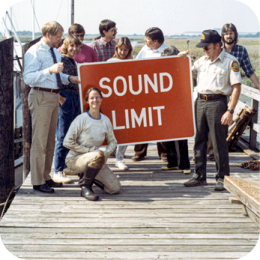
About 70 people attended the ASMFC’s public hearing in Townsend at the Sapelo Saltwater Fishing Club in October.
Tyler Jones
Public Information Officer
The Atlantic States Marine Fisheries Commission (ASMFC) has approved Addendum II to Amendment 2 of the Interstate Fishery Management Plan (FMP) for Red Drum, bringing major updates to how the species will be managed along the Atlantic coast.
These changes follow the findings of the 2024 Red Drum stock assessment, which showed that the southern stock (found in Georgia, South Carolina, and Florida) is overfished and experiencing overfishing. This means there are not enough adult red drum to reproduce at healthy levels, and too many fish are being caught each year.
Because red drum migrate and move across state boundaries, they are managed cooperatively through the ASMFC.
Earlier this fall, Atlantic coastal states held public hearings to collect input on the draft addendum. Georgia’s hearing took place Sept. 24 at the Sapelo Saltwater Fishing Club in Shellman Bluff. During the event, ASMFC staff reviewed the draft plan, and CRD explained possible Georgia-specific options. CRD will discuss potential responses to the new rules at a later date.
What the Stock Assessment Showed
The stock assessment, presented by Dr. Jared Flowers of CRD on Nov. 20, analyzed data through 2021 and evaluated juvenile, subadult, and adult red drum. The assessment found:
Red drum are overfished, meaning there are not enough spawning-age fish. Overfishing is occurring, meaning too many fish are being removed (through harvest or discard mortality) from the population.
The spawning potential ratio (SPR), a measure of reproductive potential, is below 30 percent, which is the threshold that defines overfishing. The sustainable target is 40 percent.
Juvenile recruitment has generally declined since the 2000s, likely due to environmental changes or spawning problems.
Limited data on adults makes it hard for the model to estimate adult population trends, partly because red drum can live 40 years, but Georgia’s slot limit protects older fish from harvest.
Fishing pressure and discard mortality have both increased over time.
The assessment stressed that recovery could take decades if adult numbers continue to fall.
What Addendum II Changes
Addendum II gives states a clear process for responding when new scientific information becomes available. It also allows the ASMFC Board to use improved methods to estimate how different management strategies will affect fishing mortality.
For the southern stock, the Addendum sets a management goal called F30 percent, meaning fishing pressure must be low enough to maintain at least a 30 percent spawning potential ratio. This is the minimum level needed to end overfishing. The long-term goal of reaching 40 percent SPR remains in place.
To meet the new requirement:
- Georgia and South Carolina must reduce red drum fishing by at least 14.4% and submit management plans by April 1, 2026.
- Florida, which adopted stricter red drum regulations in September 2022, is already expected to meet the required reduction.
The ASMFC will review Georgia and South Carolina’s proposals during its May 2026 meeting.