An official website of the State of Georgia.
Public comment closed at 4:30PM June 30th
The Board of Natural Resources proposes to amend the Saltwater Fishing Regulations, Subject 391-2-4. The proposed amended Rule would decrease the Red Drum daily creel limit from five (5) fish to three (3) and increase the slot size limit from 14 - 23 inches Total Length (TL) to 15 - 24 inches Total Length (TL). The Board will consider the proposed rules on Tuesday, August 25, 2026, at 9:00 AM in the DNR Boardroom, 2 Martin Luther King, Jr. Drive, SE, Suite 1252 East, Atlanta, GA 30334. Additional information can be found at https://gadnr.org/board.
 Download a PDF of all public comments received May 20, 2026 - June 30, 2026
For more information, please see the Memorandum to the Board of Natural Resources, "Proposed Amendment to the Rules of the Georgia Department of Natural Resources, Saltwater Fishing Regulations, Rule 391-2-4-.04" and the Press Release from the Coastal Resources Division.
Proposal Explainer Video
For information on the next DNR Board Meeting where this will be discussed, please visit the GaDNR Board Page.
View Presentation
Click the link below to view an annotated PDF version of the Red Drum Regulation Change Proposal presentation.
Summary of the March 2026 Public Survey
CRD hosted an online survey from February 25-March 12 to collect input from the public on three potential red drum regulation changes. The survey was completed by 760 participants.
Summary of Harvest Reduction Options
The supplemental survey information outlines several potential changes to Georgia’s recreational red drum slot and bag limits, showing how each option would reduce fishing mortality and help rebuild the stock. The options achieve 35% or 40% spawning potential ratio (SPR) targets, and are projected to reach the 30% SPR rebuilding threshold in about 5–6 years depending on the level of fishing mortality reduction.
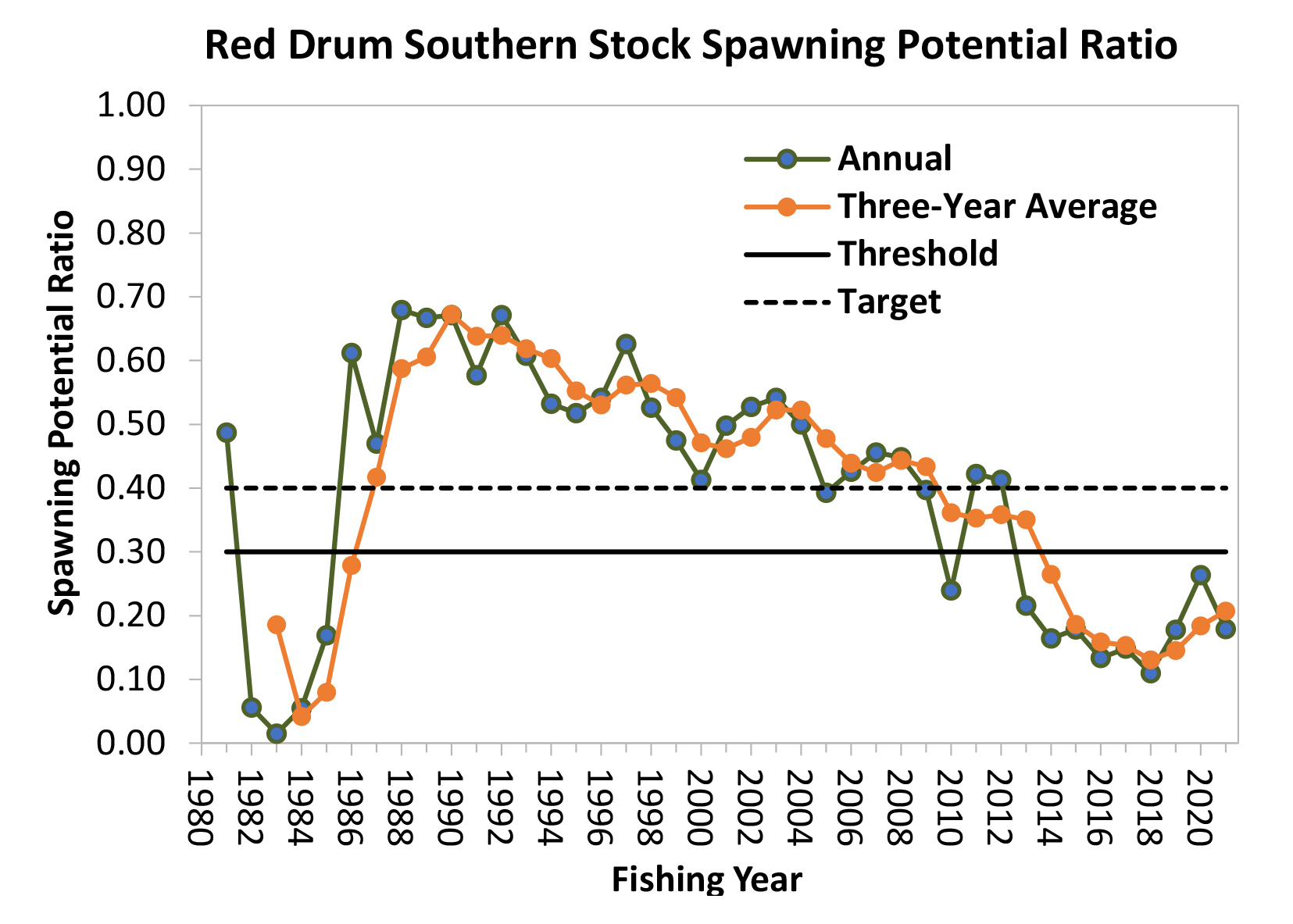
The latest Red Drum stock assessment conducted by the Atlantic States Marine Fisheries Commission (ASMFC) found the southern stock, which includes Georgia, is both overfished and experiencing overfishing. This signals that the population is stressed and needs rebuilding to stay healthy for the future. There are not enough adult fish to reproduce and too many fish are being caught. Scientists believe fewer young fish are surviving to adulthood due to a mix of fishing pressure and environmental changes. The report showed that the spawning potential ratio, a key measure of the population’s health, is below safe levels.
To address this, ASMFC adopted Draft Addendum II to the Red Drum Fishery Management Plan (FMP) to reduce fishing pressure on Red Drum. Georgia’s current rules—allowing anglers to keep five fish per person per day between 14 and 23 inches long—will have to change in the future. Options include reducing the daily bag limit or changing the slot size to allow more fish to reach reproductive size. The ASMFC held a public hearing (click to see a video) on Sept. 24, 2025 in Shellman Bluff to explain the assessment and hear from anglers. CRD also made an informal presentation about potential options for future management.
Public Participation
Georgia Department of Natural Resources Coastal Resources Division (CRD) hosted two Town Hall meetings to discuss changes to recreational Red Drum (Sciaenops ocellatus) fishing regulations in Georgia.
The meetings took place:
- Wednesday, Feb. 25, 2026, at 6 p.m. (in-person or virtually)
- College of Coastal Georgia
- Stembler Theatre
- One College Drive, Brunswick, GA 31520
- Thursday, Feb. 26, 2026, at 6 p.m. (in-person)
- Richmond Hill City Center
- 520 Cedar St, Richmond Hill, GA 31324
The purpose of the Town Halls was to inform the public about upcoming changes to Red Drum recreational fishing regulations and to explain why those changes are necessary. CRD staff provided a presentation (video above) outlining the latest stock assessment, the regulatory process moving forward, and several management options aimed at achieving long-term sustainability of the species. Attendees were asked to participate in a survey to gauge opinion about various management options. The public can access and participate in the survey by clicking here (deadline: March 12).
View a recording of the Brunswick Town Hall, held Feb. 25, 2026, here.
About the Regulation Changes
Key Findings from the 2024 Stock Assessment
- The recent assessment by the ASMFC shows that the southern red drum stock (Georgia, South Carolina, Florida) is stressed: it is both overfished (i.e. the spawning stock biomass is too low) and experiencing overfishing (i.e. fishing pressure is too high).
- The assessment used data through 2021 and looked across life stages (juveniles, subadults, adults).
- One of the metrics—spawning potential ratio (SPR)—is below the threshold of unsustainable levels (below 30 %) and below the target (40 %), indicating the stock is under significant stress.
- Juvenile recruitment (i.e. the number of young fish entering the population) has declined since the 2000s, possibly due to environmental changes, spawning challenges, or other ecological factors.
- Discard mortality and fishing removals (harvest) are contributing factors to the decline.
- Florida has made regulatory changes already which appear to have reduced catches there; Georgia and South Carolina have had more stable removals to date.
In short: the assessment signals that the Red Drum population in the southern U.S. Atlantic region needs rebuilding, and current levels of fishing are not sustainable. Learn more here.
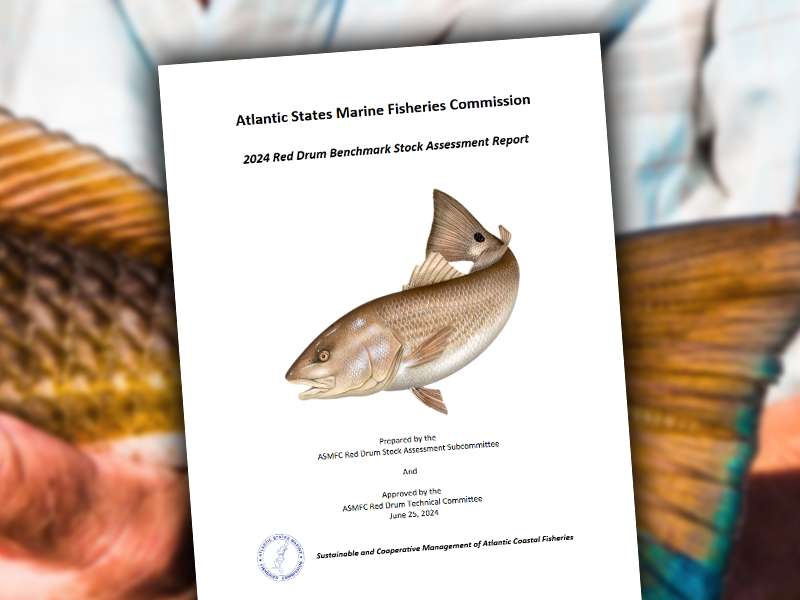
Download the ASMFC's 2024 Red Drum Benchmark Stock Assessment Report
Regulatory Response (Addendum II)
Because of the poor stock status, the ASMFC adopted Addendum II to the Interstate Red Drum Fishery Management Plan, which Georgia (along with other states) would comply with.
Some of the proposed concepts include:
- Establishing fishing mortality limits that states may not exceed.
- A formal process for states to propose regulatory changes (bag limits, size limits, etc.) in response to new scientific data or changes in stock status.
A public hearing was held Sept. 24, 2025 at the Sapelo Saltwater Fishing Club in Shellman Bluff, where a representative from the ASMFC presented the draft Addendum II. CRD also discussed Georgia-specific management options. The meeting was livestreamed and can be viewed here.
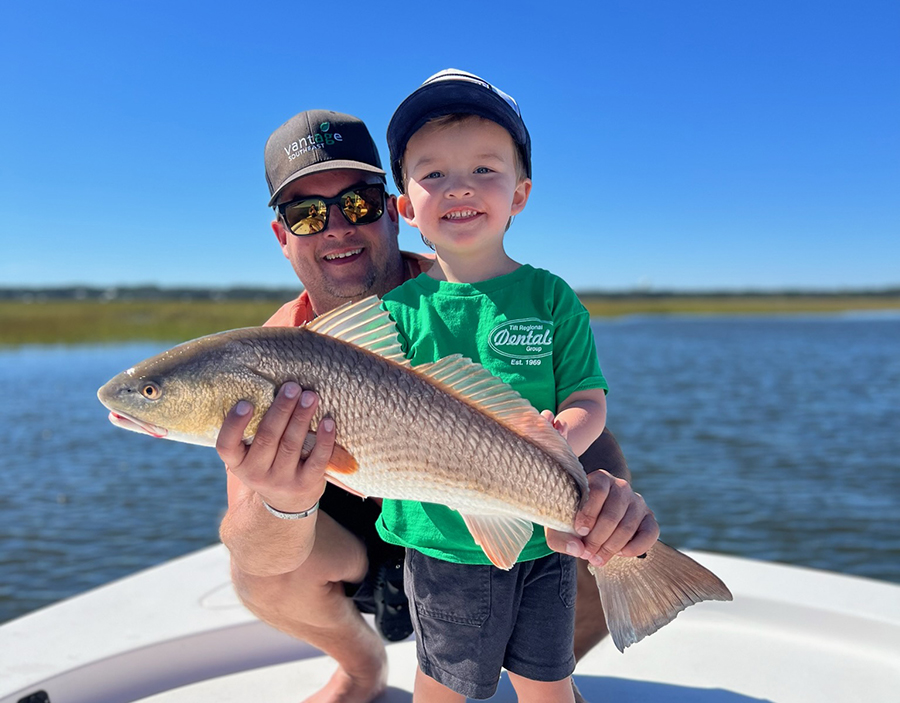
Implications for Georgia Anglers & Fisheries
- The overall goal is to rebuild the stock, protect spawning adults, and ensure sustainability and good fishing opportunities into the future.
- Because Georgia does not allow commercial harvest of Red Drum (they are managed as a gamefish only), all removals are from recreational fishing.
- Anglers may see lower bag limits and/or different slots.
Timeline
🟨 in progress 🟩 done
Board Meetings are held in person and streamed online. For more information, please visit The GaDNR Board Page.
Learn more about:
CRD presentation on Red Drum management options given during the December 2025 Finfish Advisory Panel Meeting (PDF). Presentation includes:
- Details on bag and slot limit analysis (Pages 22-27 of PDF)
CRD Status of Research and Management of Red Drum (Sciaenops ocellatus) in Georgia - 2022 Update
- Red Drum life history
- CRD data concerning Red Drum research, surveys, and statistics
2022 Red Drum Town Halls and Public Hearings
Sign Up to Receive News About Fishing Regulation Changes
Provide your email address below to register for CRD's emailing list.