An official website of the State of Georgia.
Press Release crd
Recent Press Releases
Commissioner Walter Rabon has announced that Georgia's territorial waters will reopen to commercial and recreational oyster harvest effective 6:00 a.m., Thursday, October 8, 2026.
Georgia’s territorial waters will remain closed to commercial and recreational oyster harvest beginning at 6 a.m. Thursday, Oct. 1, 2026, because coastal water temperatures remain above the threshold established to protect public health, the Coastal Resources Division (CRD) of the Georgia Department of Natural Resources (DNR) announced today.
The Georgia Department of Natural Resources’ Coastal Resources Division (CRD) is seeking public comment on proposed changes to the state’s saltwater fishing regulations that would implement a new Reef/Migratory Fish Endorsement for recreational anglers.
The Georgia Department of Natural Resources’ (DNR) Coastal Resources Division (CRD) is now accepting pre-applications for Coastal Incentive Grants (CIGs) that support the goals of the Georgia Coastal Management Program (GCMP).
Georgia recreational anglers will have 14 days to harvest red snapper (Lutjanus campechanus) in federal waters this October under a newly issued Exempted Fishing Permit (EFP) that will also test a new state-led system for collecting recreational fishing data.
The Georgia Department of Natural Resources’ Coastal Resources Division (CRD) has certified a new state saltwater game fish record for Almaco Jack (Seriola rivoliana).
The Coastal Resources Division (CRD) of the Georgia Department of Natural Resources (DNR) is seeking qualified applicants to serve on a committee that advises CRD’s Georgia Coastal Management Program (GCMP).
DNR seeks public input on proposed rules establishing standards, licensing, and enforcement procedures for private docks in Georgia's tidal waters.
The Georgia Department of Natural Resources’ Coastal Resources Division (CRD) invites residents and visitors to celebrate Georgia’s coast during Beach Week 2026, a series of free, family-friendly events designed to bring coastal education directly to the beach.
A proposed pilot red snapper fishing season for Georgia’s recreational anglers has been delayed following a federal court ruling that halted a series of Exempted Fishing Permits (EFPs) for South Atlantic states.
The Georgia Department of Natural Resources' Coastal Resources Division announced that Georgia's commercial food shrimp season will open in state territorial waters at 8 a.m. Tuesday, June 9, 2026.
Recreational and commercial oyster harvesting in Georgia will close at 6 a.m. June 1, 2026, and re-open for the year thirty minutes before sunrise on Thursday, October 1, 2026, the Georgia Department of Natural Resources (DNR) announced today.
DNR is seeking public input on a proposal to reduce Georgia’s recreational daily creel limit for red drum from five fish to three fish and adjust the slot size limit from 14–23 inches total length to 15–24 inches total length.
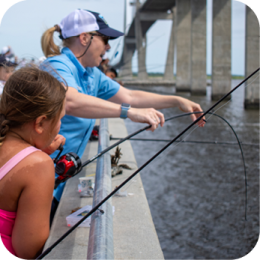
Registration is now open for the Georgia Department of Natural Resources’ Coastal Resources Division (CRD) John Pafford Memorial Kids Fishing Event, scheduled for 8 a.m. to 11 a.m. Saturday, June 13.
Georgia DNR’s Coastal Resources Division has launched GeorgiaRedSnapper.com, a new website providing anglers with information about Georgia’s July–August 2026 red snapper season. The site explains trip registration, mandatory catch reporting through the VESL app, regulations, participation requirements, and other resources supporting the Georgia Red Snapper Project.
The Georgia Department of Natural Resources’ (DNR) Coastal Resources Division (CRD) announces the official reopening of the James Allen Williamson Park & Boat Ramp at the Champney River following completion of major renovations designed to improve boating access, fishing opportunities, and public safety.
CRD seeks public comment on a proposed rule allowing certified shellfish farmers more time to harvest oysters during summer closed season.
The Georgia Department of Natural Resources Coastal Resources Division is encouraging Georgia anglers to submit public comments to NOAA Fisheries on a proposed pilot project that would test improved data collection and management strategies for recreational Red Sna
The Georgia Department of Natural Resources Coastal Resources Division has established a new 22.5-acre commercial oyster harvest area on Jointer Creek in Glynn County, allowing three leaseholders to grow oysters using floating gear.
CRD will host two Town Halls to explain Red Drum stock concerns identified by the Atlantic States Marine Fisheries Commission and gather public input on potential recreational fishing management changes.